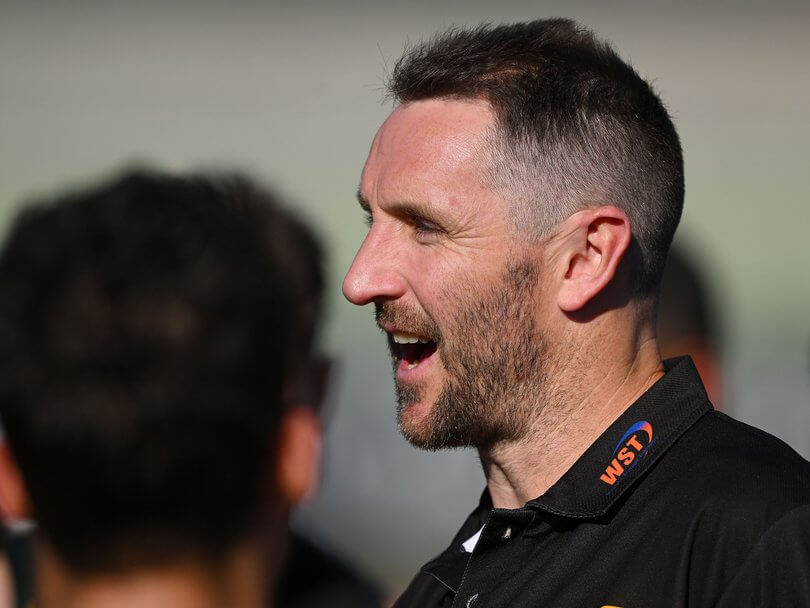
As part of SKILD's growing library of high-performance coaching insights, we sat down with Michael Barlow, former Fremantle Dockers and Gold Coast SUNS midfielder and now midfield coach at North Melbourne Football Club. In this wide-ranging conversation, Barlow reflects on his journey into coaching, the challenges facing modern AFL players, and the evolving expectations of elite coaches. His perspective, shaped by personal experience, development coaching and life lessons, offers valuable takeaways for athletes and coaches across all sports.
Q: Michael, to start us off, can you share a little about your background and what inspired you to move into professional coaching?
Michael Barlow: It's funny - I've been talking about this a bit recently because in club land we often revisit our "why." As a kid, you grow up playing sports because it's fun, aspirational, and stimulating. If you're good enough, you get the chance to turn it into a career, but very few kids grow up dreaming specifically of being a coach.
I was drafted late and got to experience life outside football, studying at uni, working and playing part-time, before I made it to the AFL. Once I was drafted, I fell in love with the game and did coaching accreditations along the way, but my biggest influence was actually my mum. She wasn't a football coach, but she was a teacher and coach in netball; quite simply coaching was embedded in her DNA.
At the end of my AFL career with the Suns, she fell terminally ill. I spent six to eight weeks with her. This was more time than I'd had with her since leaving school. Right to her last breath she was thinking about coaching, teaching and investing in others. That period profoundly shaped me. I didn't jump straight into coaching, but I had a clear sense that this is where I was heading. Coaching became a way to stay connected to her influence, and to the game I love.
Q: You're now the midfield coach at North Melbourne. When players arrive at AFL level, what are the biggest development challenges you see?
Michael Barlow: There's a huge gap between under-18s and AFL football. The number one gap is contest work - the physical reps needed to compete against mature bodies. Kids dominate junior football, but they haven't been exposed to seasoned athletes. Players like Harry Sheezel might transition seamlessly, but they're the exception, not the rule.
Most young players, especially key position players, need time to absorb reps, learn through exposure, and build that physical resilience. Some draft picks come straight from underage programs without having played senior football, so their first experience of contesting against grown men might be in an AFL training session going up against a Luke Davies-Uniacke type. That's a steep learning curve.
Another challenge is managing expectations. Many of these players have been the standout in every team they've played in. Suddenly they enter an environment where they're not playing their preferred role, aren't the focal point, and must learn systems, roles, and team-first behaviours. That transition is tough but essential.
Q: When you're working with youth talent or early-career players, what does individualised coaching look like?
Michael Barlow: In my previous role as Head of Development, the foundation is a strong individual development plan. It's something the coach and player build together. You sit down at the start of pre-season and talk through tactical understanding, technical skills, learning preferences, gaps, and strengths.
Then we identify two or three specific actions or habits we'll chase every week - touch sessions, ground-ball work, goal-kicking under fatigue, contested drills. The key is simplicity and consistency. You don't want to overload players with 15 different focuses every week.
The real art of coaching is balancing the plan with the person - building a genuine relationship, understanding what's going on off the field and tailoring communication and learning environments accordingly. I believe that this approach applies to nearly every single sport and the best coaches are masters in breaking down complex instructions to their simplest form - allowing athletes to quickly comprehend on how they can improve.
The best coaches break down complex instructions to their simplest form, allowing athletes to quickly comprehend how they can improve.
Q: You mentioned coach accountability. How important is that in a player's development journey?
Michael Barlow: It's everything. As a development coach, my job was to value accountability as highly as player output. Now as a midfield coach, I see it the same way. I'm responsible for ensuring every player in my group gets equal opportunity to improve; whether that's through vision edits, education, or skill acquisition.
The player buys in, but the coach must drive the process. If you get the development plans right, you improve the individual. That improves the midfield group, and ultimately the team. It's an easy success metric: better players equals better football.
Q: AFL coaching has become increasingly professional. What does a typical week look like for you during pre-season and in-season?
Michael Barlow: Pre-season is where you build relationships and habits. With no weekly game pressure, I can invest time in skill acquisition, repetition under fatigue, and embedding our game plan. It's hands-on - lots of touch, craft work, and extra sessions.
During the season, it becomes the classic weekly cycle:
- Monday: Review team and individual performance.
- Tuesday: Begin opposition analysis and set improvement actions.
- Mid-Week: Training loads, game-plan education, individual check-ins.
- Late Week: Finalise opposition strategy and refine player roles.
You rinse and repeat. Pre-season is broader and more developmental. In-season becomes faster, more focused, and driven by the demands of the next opponent.
Q: You mentioned action plans. What does one of those look like in practical terms?
Michael Barlow: It's simple but structured. An action plan sits within the development plan and includes clear, measurable tasks: two 15-minute touch sessions a week, 50 shots on goal after training with specific breakdowns - snaps (a type of kick for goal executed at a tight angle), kicking on-the-run, or set shots. It also includes gym sessions, positional craft, or a tactical review.
Around 80 per cent stays consistent month-to-month so players build habits. The remaining 20 per cent is flexible and adjusts based on weekly needs.
Q: Finally, what did you study at university - and does it influence your coaching today?
Michael Barlow: I studied Urban Planning and Development at Melbourne Uni. It couldn't be further from coaching, but oddly you learn so much in this job across psychology, leadership, communication, administration, and education that you almost pick up four or five "pseudo-degrees" along the way.
Coaching builds a skill set that transfers into so many fields. You learn how to manage people, drive culture, communicate under pressure and build structure. Even though I'm not using my degree directly, those broader capabilities shape how I work today.
Closing Thoughts
Barlow's insights reinforce what modern coaching is becoming: a balance of technical mastery, emotional intelligence, individualised development, and relentless accountability. Whether you're coaching elite AFL talent, junior athletes, or performers in another sport entirely, his approach offers lessons that transcend football.


