Coaching young swimmers is both a privilege and a responsibility. The habits, techniques, and attitudes developed in the early years of swimming form the foundation for everything that follows. A coach who prioritises technique over early results creates swimmers who can continue to improve throughout their careers, while those who chase times at the expense of mechanics often create athletes who plateau early and struggle later.

The Long-Term Athlete Development Model
Understanding child development stages helps coaches design appropriate training:
FUNdamentals Stage (Ages 6-9)
- Primary focus: Water comfort, basic movement skills, fun
- Training approach: Short, varied activities; games and challenges
- Technical focus: Basic body position, kicking, breathing
- Competition: Minimal or none; emphasis on participation
Learn to Train Stage (Ages 9-12)
- Primary focus: Skill development across all strokes
- Training approach: Structured sessions with variety
- Technical focus: All four strokes, starts, turns
- Competition: Developmental meets; personal bests emphasised
Train to Train Stage (Ages 12-16)
- Primary focus: Building aerobic capacity, refining technique
- Training approach: Increased volume; periodised training begins
- Technical focus: Advanced mechanics, race skills
- Competition: More frequent; learning to race
Research suggests it takes approximately 10 years (or 10,000 hours) of deliberate practice to reach elite levels in most sports. Early specialisation and excessive training volume are not short-cuts - they are paths to burnout. Patience in development pays dividends later.
Technique-First Philosophy
Why should technique be prioritised over early performance results?
Benefits of Technique-First Approach
- Higher ceiling: Good technique allows for continued improvement; poor technique limits potential
- Injury prevention: Proper mechanics reduce stress on joints and muscles
- Efficiency: Good technique means faster swimming with less effort
- Transferable skills: Correct fundamentals apply across all strokes and distances
- Longevity: Athletes with good technique can compete longer
The Danger of Early Results Focus
Coaches who prioritise early wins often create:
- Athletes with poor mechanics that become harder to fix with age
- Early peakers who plateau or decline as others catch up
- Burned-out swimmers who leave the sport
- Injured athletes from inappropriate training loads
- Extrinsic motivation that fades when winning becomes harder
Teaching Technique Effectively
Principles of Skill Acquisition
- Break skills into components: Complex movements should be taught in manageable parts
- Progress from simple to complex: Master basics before advancing
- Provide clear demonstrations: Show what correct technique looks like
- Use appropriate cues: Simple, memorable phrases that trigger correct movement
- Give specific feedback: Focus on one correction at a time
- Allow for practice: Repetition with feedback is essential for skill development
Effective Feedback Strategies
- Be specific: "Keep your elbow higher on the recovery" rather than "better arm movement"
- Be positive: Acknowledge what is correct before correcting errors
- Be timely: Feedback is most effective immediately after the action
- Be simple: One correction at a time; do not overwhelm
- Ask questions: "What did you feel on that lap?" develops body awareness
When giving feedback, use the sandwich approach: positive observation, correction, positive encouragement. "Your kick is looking really powerful. Try to keep your head a bit steadier when you breathe. Great effort - keep it up!"
Creating Engaging Sessions
Young swimmers learn best when they are engaged and enjoying themselves.
Session Design Principles
- Variety: Change activities frequently to maintain attention
- Games: Incorporate games that develop technique without feeling like drills
- Challenges: Set achievable challenges that promote effort and improvement
- Social elements: Include partner and team activities
- Autonomy: Give choices where appropriate (e.g., which drill to do)
Sample Session Structure (60 minutes)
- Warm-up (10 min): Easy swimming, fun activities to get moving
- Technique focus (15 min): Drills and feedback for the session's focus skill
- Main set (20 min): Swimming that incorporates the technique focus
- Fun/game element (10 min): Relay, game, or challenge
- Cool-down (5 min): Easy swimming and stretch
Technique Priorities by Stroke
Freestyle
- Streamlined body position (head down, hips up)
- Rotation from core, not just shoulders
- High elbow catch
- Relaxed recovery
- Efficient, rhythmic kick
Backstroke
- Head still, eyes up
- Body rotation with steady kick
- Pinky-first entry
- Deep catch before pull
- Straight arm recovery
Breaststroke
- Streamlined glide position
- Timing: pull, breathe, kick, glide
- Knees inside heels on kick
- Quick, narrow recovery
- Head down during glide
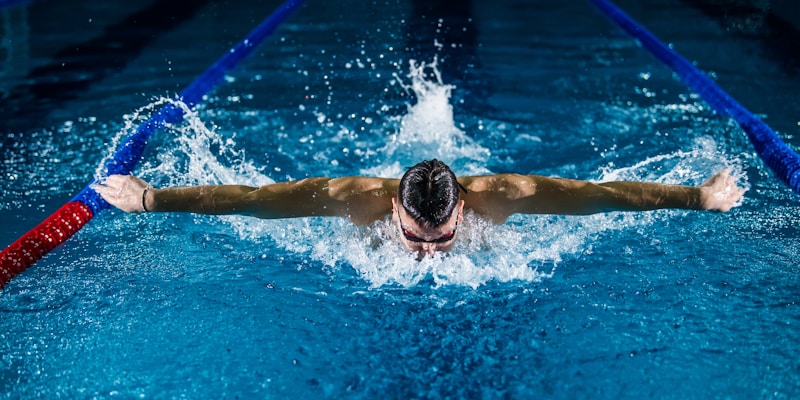
Butterfly
- Rhythm and timing
- Undulating body movement
- Two kicks per stroke cycle
- Low, relaxed recovery
- Chin forward, not up, for breath
Building a Positive Team Culture
The environment you create affects learning, retention, and long-term development.
Elements of Positive Culture
- Effort over outcome: Praise hard work and improvement, not just winning
- Respect: Between swimmers, between coach and swimmer, for the sport
- Inclusion: Every swimmer matters, regardless of ability level
- Fun: Enjoyment should be central to the experience
- Growth mindset: Mistakes are learning opportunities
Communication with Parents
Parents are partners in athlete development:
- Set clear expectations about your coaching philosophy
- Educate parents about long-term development
- Communicate regularly about swimmer progress
- Define appropriate parent behaviour at competitions
- Encourage supportive, not pressuring, involvement
"The goal of coaching young swimmers is not to produce the fastest 10-year-old, but to develop swimmers who love the sport and have the technical foundation to keep improving for years to come." - Long-Term Development Principle
Common Coaching Mistakes to Avoid
- Too much volume too soon: Young swimmers do not need adult training programs
- Ignoring technique for fitness: Technique should never be sacrificed for metres
- Over-emphasis on competition: Racing is a small part of development
- One-size-fits-all coaching: Every swimmer is different
- Negative feedback only: Criticism without encouragement damages motivation
- Parent pressure: Allowing external pressure to drive inappropriate decisions
Measuring Success Differently
In youth swimming, success should be measured by:
- Technical improvement (not just time improvement)
- Athlete enjoyment and retention
- Development of all four strokes
- Growth in confidence and love of the sport
- Healthy physical development
- Life skills development (goal setting, perseverance, teamwork)
Conclusion
Coaching young swimmers is about planting seeds for the future. The technique you teach, the culture you create, and the love of swimming you inspire will shape these athletes for years to come. Resist the temptation to chase early results at the expense of proper development. Focus on technique first, make sessions engaging, build positive relationships, and trust that good coaching will produce good swimmers - in time. Your patience and commitment to doing things right will be rewarded when you see your swimmers thriving years down the road, still loving the sport and still improving.


