Freestyle, also known as front crawl, is the fastest and most efficient swimming stroke. Whether you are a competitive swimmer looking to shave seconds off your time or a recreational swimmer seeking smoother, more effortless laps, mastering proper freestyle technique is essential for success in the water.
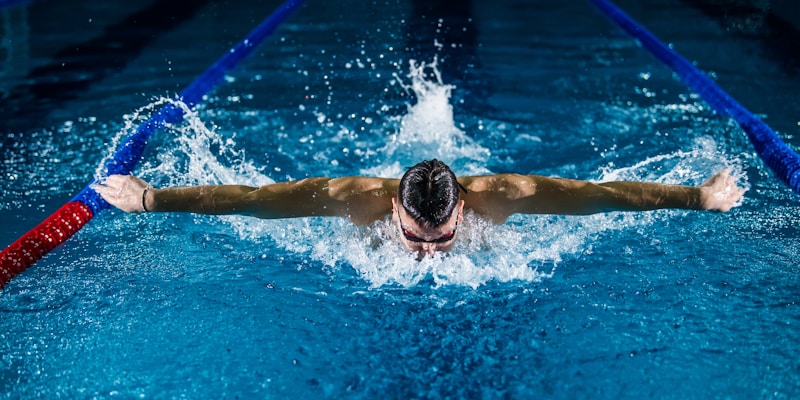
The Foundation: Body Position
Efficient freestyle begins with proper body position. Your body should be horizontal and streamlined, minimising drag and allowing you to move through the water with minimal resistance.
Key Elements of Body Position
- Head Position: Keep your head in a neutral position, looking down at the pool floor. The waterline should hit at your hairline or forehead. Lifting your head too high causes your hips and legs to drop.
- Hip Position: Your hips should stay high in the water, close to the surface. Think of swimming "on top" of the water rather than ploughing through it.
- Body Rotation: Rotate your body along your long axis as you stroke. This rotation should come from your core and hips, not just your shoulders.
- Streamlined Profile: Keep your body as narrow as possible. Arms extend forward in line with your shoulders, not crossing the centreline.
Practice swimming with a snorkel to focus on body position without the distraction of breathing. This allows you to maintain a consistent head position while developing awareness of your streamline.
The Arm Stroke: Catch, Pull, and Recovery
The arm stroke is where propulsion happens. A powerful, efficient stroke comes from proper mechanics through each phase of the movement.
1. The Entry and Extension
Your hand should enter the water fingertips first, approximately in line with your shoulder. After entry, extend your arm forward before beginning the catch. This extension phase is crucial for stroke length and efficiency.
2. The Catch
The catch is where you "grab" the water. Key points include:
- Flex your wrist and elbow to achieve an early vertical forearm (EVF) position
- Your forearm and hand should form a paddle facing backward
- Keep your elbow high throughout the catch
- Engage your lats rather than just your arm muscles
3. The Pull
Once you have established a strong catch, pull your hand and forearm backward in an S-pattern or straight-back motion (both are effective). The pull should accelerate through the stroke, finishing past your hip with a full arm extension.
4. The Recovery
As your hand exits the water near your hip, lead the recovery with your elbow. Keep your hand relaxed and close to the water surface. A high elbow recovery is more efficient and reduces shoulder strain.

Kick Technique: Propulsion and Balance
The freestyle kick serves two primary purposes: propulsion and body position maintenance. While the kick provides less propulsion than the arm stroke (roughly 10-20% of total propulsion), it is essential for maintaining a streamlined body position.
Kick Mechanics
- Initiate from the hip: The kick should start from your hip flexors, not your knees. This creates a whip-like motion that maximises propulsion.
- Keep ankles flexible: Pointed, flexible ankles allow your feet to act as fins. Stiff ankles create drag and reduce kick effectiveness.
- Maintain small amplitude: Your kick should be compact, with feet staying within your body's "shadow" in the water.
- Kick continuously: Most swimmers use a 6-beat kick (6 kicks per arm cycle) for sprinting and 2-beat or 4-beat kicks for distance swimming.
Kicking from the knee (bicycle kick) is one of the most common errors in freestyle. This creates drag and wastes energy. Focus on keeping your legs relatively straight with movement originating from the hips.
Breathing Technique
Proper breathing is often what separates smooth, efficient swimmers from those who struggle. The key is to integrate breathing seamlessly into your stroke.
Bilateral vs. Unilateral Breathing
Bilateral breathing (alternating sides every 3 strokes) is recommended for most swimmers because it:
- Promotes balanced stroke mechanics
- Develops symmetrical muscle development
- Allows you to see both sides during open water swimming
- Gives you options in race situations
Breathing Mechanics
- Exhale underwater: Continuously exhale through your nose and mouth while your face is in the water. This ensures you're ready to inhale quickly when you turn.
- Turn, don't lift: Rotate your head with your body rotation to breathe. One goggle should remain in the water.
- Breathe into the "bow wave": Your head creates a trough of air at your mouth level. Breathe into this pocket rather than lifting your head.
- Quick inhale: Inhale quickly through your mouth and immediately return your head to the neutral position.
Drills for Improvement
Catch-Up Drill
Swim freestyle but wait until one hand catches up to the other in front before starting the next stroke. This emphasises extension and promotes a longer stroke.
Fingertip Drag
During the recovery phase, drag your fingertips along the water surface. This promotes a high elbow recovery and relaxed arm.
Side Kick Drill
Kick on your side with the bottom arm extended forward and top arm at your side. Practice rotating to breathe and returning to the side position. This develops body rotation and breathing technique.
Fist Drill
Swim freestyle with closed fists. This reduces your paddle surface, forcing you to use your forearms for propulsion and improving your feel for the water.
"Swimming is not about moving through the water quickly; it's about moving through the water efficiently. Speed follows efficiency." - Terry Laughlin, Total Immersion Swimming
Putting It All Together
Improving your freestyle technique is a gradual process. Focus on one element at a time, and practice deliberately:
- Week 1-2: Focus on body position and head position
- Week 3-4: Work on catch and pull mechanics
- Week 5-6: Refine your kick technique
- Week 7-8: Integrate breathing seamlessly
Video analysis is invaluable for technique improvement. Record yourself underwater and from the side to identify areas for improvement. Work with a qualified coach who can provide personalised feedback.
Conclusion
Efficient freestyle technique is built on the fundamentals of body position, arm stroke mechanics, kick technique, and breathing. By focusing on these elements and incorporating targeted drills into your training, you will swim faster while expending less energy. Remember, technique improvements take time and deliberate practice. Be patient with yourself and trust the process.


