Dryland training - strength and conditioning work performed outside the pool - is an essential component of a complete swimming program. While pool time builds swimming-specific fitness, dryland training develops the strength, power, stability, and mobility that transfer to faster, more efficient swimming. A well-designed dryland program can be the difference between plateauing and reaching your potential.
Why Dryland Training Matters
The benefits of dryland training for swimmers include:
- Increased power: Greater force production translates to faster starts, turns, and stroke power
- Injury prevention: Balanced strength reduces risk of overuse injuries, particularly in the shoulders
- Improved core stability: A strong core maintains body position and transfers power through the stroke
- Better posture: Counteracts the forward-rounded posture common in swimmers
- Enhanced mobility: Flexibility and range of motion support better technique
- Bone density: Weight-bearing exercise promotes bone health (important since swimming is non-weight-bearing)
Key Areas for Swimmers
1. Core Strength and Stability
The core is the foundation of swimming performance. It connects your upper and lower body, maintains streamline position, and transfers power from your legs through to your arms.
Essential Core Exercises:
- Plank variations: Front plank, side plank, plank with arm/leg lift
- Dead bugs: Excellent for anti-extension and core coordination
- Pallof press: Anti-rotation strength crucial for body roll control
- Bird dogs: Core stability with movement
- Hollow body holds: Mimics streamline position
Focus on core stability (resisting movement) rather than just core strength (creating movement). Swimmers need a stable core that maintains position under the forces of swimming, not a core that creates excessive motion.
2. Upper Body Pulling Strength
The pull is the primary source of propulsion in swimming. Developing pulling strength improves stroke power and efficiency.
Key Pulling Exercises:
- Pull-ups and chin-ups: The gold standard for pulling strength
- Lat pulldowns: A progression toward pull-ups or for higher volume work
- Bent-over rows: Builds back thickness and pulling power
- Cable straight-arm pulldowns: Mimics the catch phase of the stroke
- Face pulls: Important for rear deltoid and rotator cuff health
3. Shoulder Health and Stability
The shoulder is the most vulnerable joint in swimming due to the repetitive overhead motion. Dryland training should include exercises that strengthen and protect the shoulders.
Shoulder Health Exercises:
- External rotations: With bands or light dumbbells
- YTWLs: A series of movements targeting the shoulder blade muscles
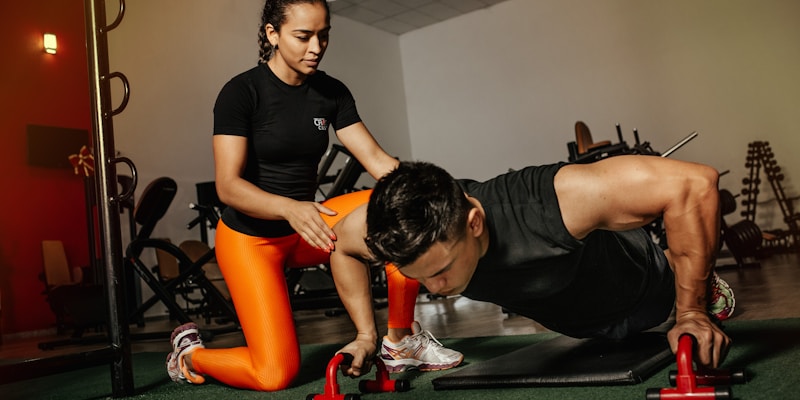
- Serratus anterior exercises: Push-up plus, wall slides
- Rear deltoid work: Reverse flys, face pulls
4. Lower Body Power
Leg strength contributes to powerful starts, turns, and kicking. Explosive lower body work is particularly important for sprinters.
Lower Body Exercises:
- Squats: Back squat, front squat, goblet squat
- Deadlifts: Romanian deadlift, trap bar deadlift
- Lunges: Forward, reverse, lateral variations
- Box jumps: Explosive power development
- Single-leg exercises: Bulgarian split squats, step-ups for balance and stability
5. Flexibility and Mobility
Adequate range of motion allows for better technique and reduces injury risk. Key areas for swimmers include:
- Shoulders: Overhead mobility for streamlined starts and turns
- Thoracic spine: Rotation for body roll
- Hip flexors: Extension for proper streamline and kick
- Ankles: Plantar flexion for effective kicking
Sample Dryland Programs
Beginner Program (2x per week, 30-40 minutes)
Warm-up (5 minutes):
- Jumping jacks - 30 seconds
- Arm circles - 10 each direction
- Leg swings - 10 each leg
- Bodyweight squats - 10 reps
Main Circuit (3 rounds):
- Push-ups - 10-15 reps
- Inverted rows or resistance band rows - 10-15 reps
- Bodyweight squats - 15 reps
- Plank - 30-45 seconds
- Dead bugs - 10 each side
- External rotations with band - 15 each arm
Cool-down (5 minutes):
- Shoulder stretches
- Hip flexor stretch
- Quad stretch
- Chest doorway stretch
Intermediate Program (3x per week, 45-60 minutes)
Day 1 - Upper Body Focus:
- Pull-ups or lat pulldowns - 3x8-10
- Dumbbell bench press - 3x10
- Cable rows - 3x12
- Face pulls - 3x15
- YTWLs - 2x10 each position
- Pallof press - 3x10 each side
Day 2 - Lower Body Focus:
- Goblet squats - 3x10
- Romanian deadlifts - 3x10
- Walking lunges - 3x12 each leg
- Glute bridges - 3x15
- Box jumps or squat jumps - 3x6
- Plank variations - 3x30-45 seconds
Day 3 - Full Body/Power:
- Medicine ball slams - 3x8
- Cable straight-arm pulldowns - 3x12
- Dumbbell push press - 3x8
- Single-leg deadlifts - 3x8 each leg
- Core circuit (dead bugs, bird dogs, side plank) - 2 rounds
Avoid heavy dryland training immediately before important swim sessions or competitions. The best times for dryland are after swimming (when you can afford to be fatigued) or on separate days. Allow at least 6 hours between dryland and a quality swim session.
Periodisation for Swimmers
Dryland training should be periodised alongside your swim training:
Off-Season / Base Phase
- Higher volume dryland (3-4 sessions per week)
- Focus on building strength foundation
- Address weaknesses and imbalances
- Moderate to heavy loads
Pre-Competition Phase
- Transition to power development
- Reduce volume, increase intensity
- More explosive exercises (jumps, throws)
- 2-3 sessions per week
Competition Phase
- Maintenance focus
- Low volume (1-2 short sessions per week)
- Keep neural activation with light power work
- Prioritise recovery and swim performance
Taper
- Minimal dryland (1 light session or none)
- Focus entirely on swimming and recovery
- Do not introduce new exercises
"Dryland training should complement your swimming, not compete with it. The goal is to be stronger in the water, not exhausted from the gym." - Strength and Conditioning Principle
Common Mistakes to Avoid
- Too much volume: More is not always better. Quality over quantity.
- Neglecting recovery: Allow adequate rest between dryland sessions
- Ignoring mobility: Flexibility work is as important as strength work
- Non-specific training: Choose exercises that transfer to swimming
- Heavy lifting before competitions: Scale back dryland before important meets
- Skipping shoulder prehab: Include rotator cuff and scapular exercises in every session
Conclusion
Dryland training is a valuable tool in every swimmer's training program. By developing strength, power, stability, and mobility outside the pool, you can enhance your performance in the water and reduce injury risk. Start with the basics, progress gradually, and always remember that dryland training should support your swimming goals, not hinder them. Work with a qualified strength and conditioning coach if possible to develop a program tailored to your individual needs and training schedule.


